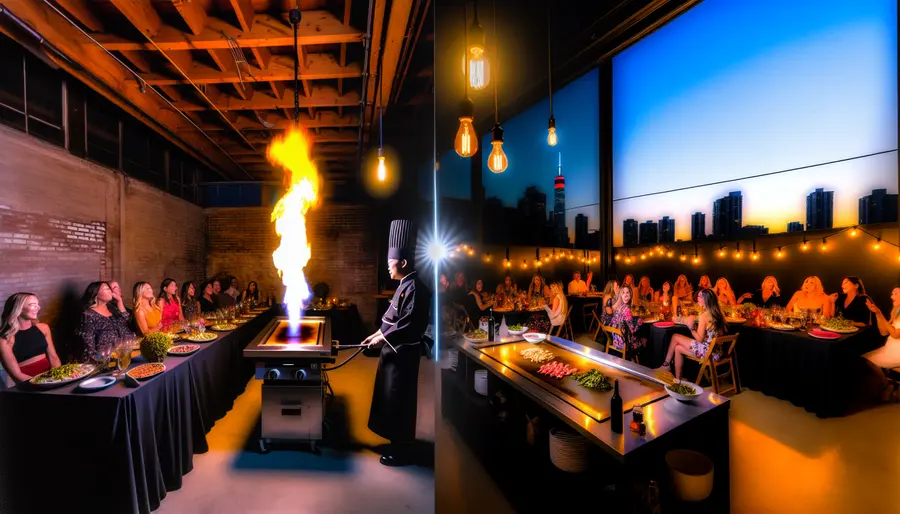
Indoor vs outdoor hibachi catering provides unique options for those looking to elevate their private dining experiences at home. This innovative approach is ideal for both small, intimate dinners and lively backyard parties. As guests enjoy both the exquisite flavors and the culinary performance, understanding the differences between the two settings helps you make the best choice for your event.
Exploring Indoor vs Outdoor Hibachi Catering Basics
Hibachi catering features high-heat grilling in Japanese style, with chefs performing dynamic cooking routines in front of guests. This interactive and entertaining culinary art marries food preparation with showmanship. Understanding these elements helps in deciding whether indoor or outdoor catering fits your venue and guest preferences.
Both indoor and outdoor setups rely on mobile equipment, including a flat-top grill and essential tools. Chefs bring their fresh ingredients along with the iconic hibachi spatulas and knives, expertly handling food and flames alike.
Advantages of Indoor Hibachi Catering
Indoor hibachi catering offers significant benefits, especially where climate control is vital. Weather independence is a key advantage, eliminating disruptions from unpredictable rain or extreme temperatures. Access to utilities like electricity is a practical plus, simplifying the culinary setup.
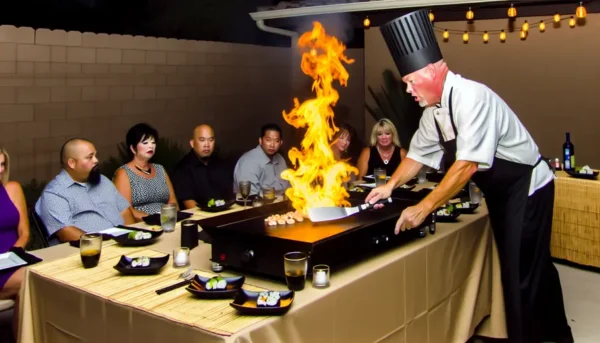
An indoor environment enhances intimacy, allowing for personalized engagement between chef and diners. For instance, living rooms and large kitchens in urban settings, like New York City, facilitate cozy, interactive dining experiences. Companies like “The Hibachi Experience” offer tailored indoor events in limited outdoor spaces.
Joys of Outdoor Hibachi Catering
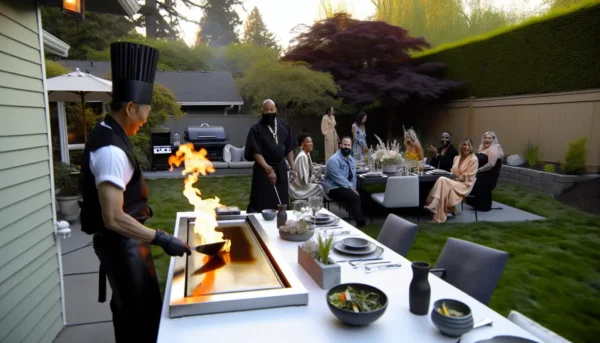
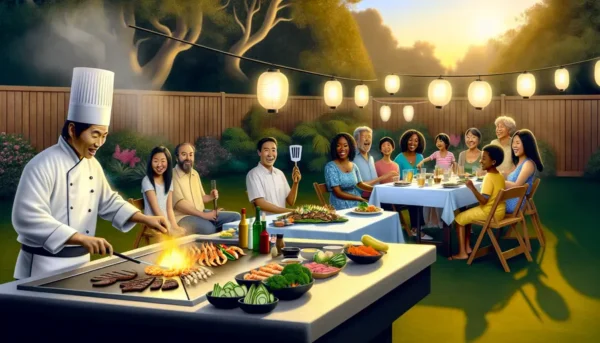
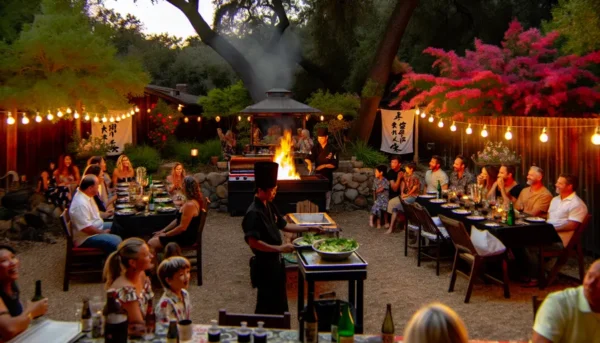
Opting for outdoor hibachi catering delivers a different yet equally delightful experience. Nature-rich settings are perfect for larger gatherings with a relaxed atmosphere. Outdoor spaces often permit more guests and elaborate culinary displays. Backyards and gardens allow chefs and guests ample room for culinary artistry and socializing.
Mild climate regions, such as Southern California, are ideal for outdoor hibachi events. Companies like “Zen Chef 2 U” in Los Angeles create memorable outdoor experiences, framed by beautiful natural backdrops.
Challenges and Considerations
Choosing between indoor and outdoor hibachi catering requires understanding potential challenges. Indoors, available space can pose limitations for hibachi setup and guest comfort. Measuring areas, ensuring good ventilation, and verifying capacity are essential steps for a successful indoor event.
Outdoors, while space might not be an issue, weather unpredictability can cause disruptions. Preparing with backup tents or awnings and checking forecasts is critical. Managing grill temperatures and flames in windy conditions is challenging, so position equipment strategically.
Tips for a Successful Hibachi Catering Event
For a successful hibachi event, clear communication with your caterer is essential. Discuss dietary preferences and the level of interaction desired. Align the hibachi experience with your event theme, be it an elegant dinner or festive barbecue.
Prepare your space by clearing necessary areas and ensuring utilities like water, electricity, and lighting are accessible. For outdoor events, arrange seating that protects guests from weather changes. Encourage suitable attire for safety around open flames and hot surfaces.
Your choice between indoor and outdoor hibachi catering depends on specific circumstances. Either option promises a uniquely enjoyable and memorable experience.